Are you an LLM? View /plutonium-core/llms.txt for optimized Markdown documentation, or /plutonium-core/llms-full.txt for full documentation bundle
Plutonium · The Rails RAD framework
The Rails framework for things you should never write again.
Convention over configuration, extended to everything you keep rebuilding.
CRUD.Auth.Authorization.Multi-tenancy.Wizards.Kanban.Dashboards.Admin portals.Search, filters, bulk actions. All generated. All customizable. All Rails.
$ rails g pu:pkg:portal admin
create packages/admin_portal/...$ rails g pu:res:scaffold Post title:string body:text published_at:datetime --dest=main_app
create app/models/post.rb create app/definitions/post_definition.rb$ rails g pu:res:conn Post --dest=admin_portal
✓ Connected Post to AdminPortal$
What you stop writing.
Same scaffold command. Two starting points. Very different surface area.
Rails scaffold
$ rails g scaffold Post title:string body:text published_at:datetime
Just CRUD
Plutonium
$ rails g pu:res:scaffold Post title:string body:text published_at:datetime --dest=main_app
Full CRUD+ Search+ Filters+ Custom actions+ Bulk actions
Scaffold a portal in minutes.
asciinema · scaffold a blog
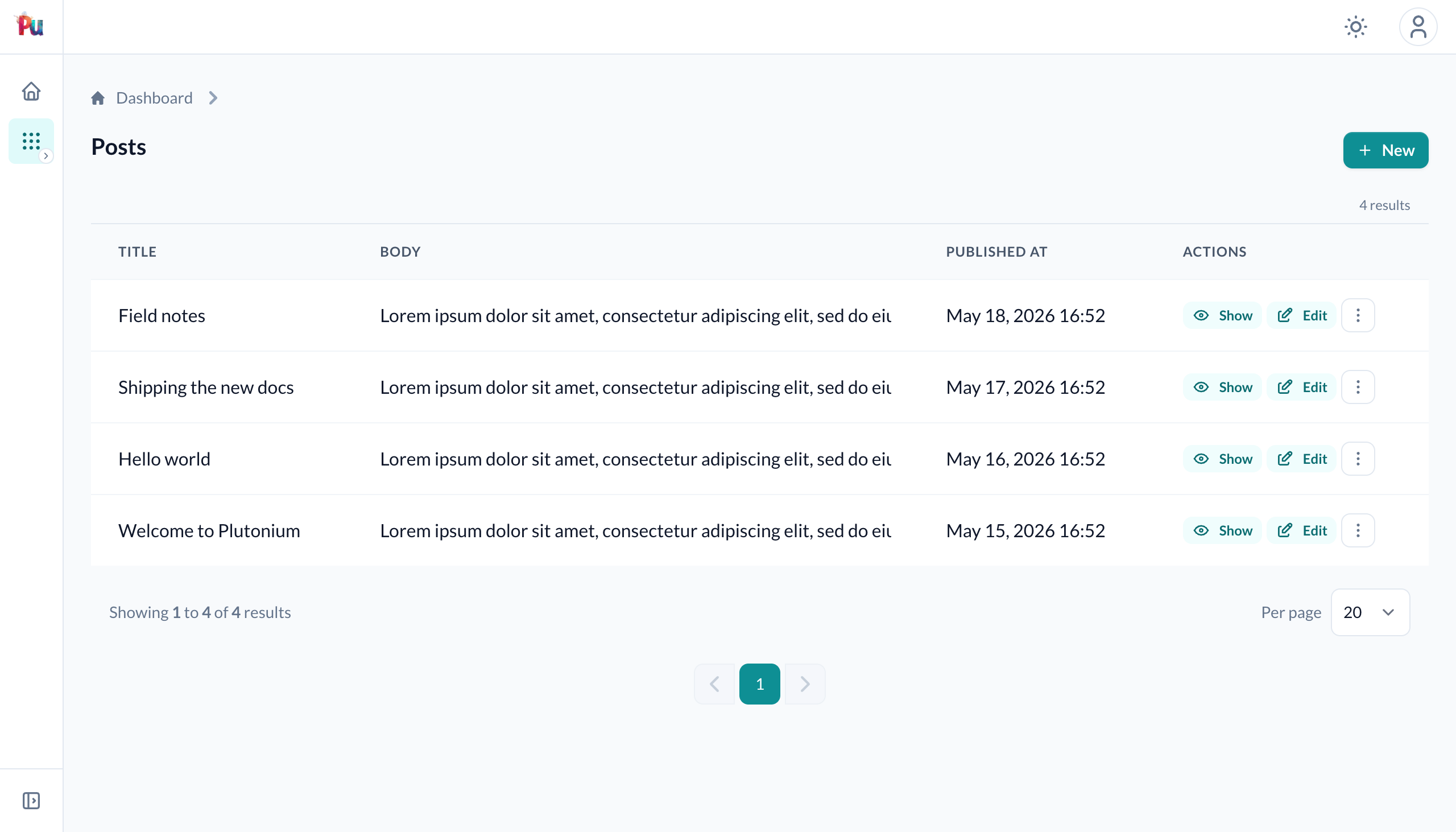
Index
/admin/posts
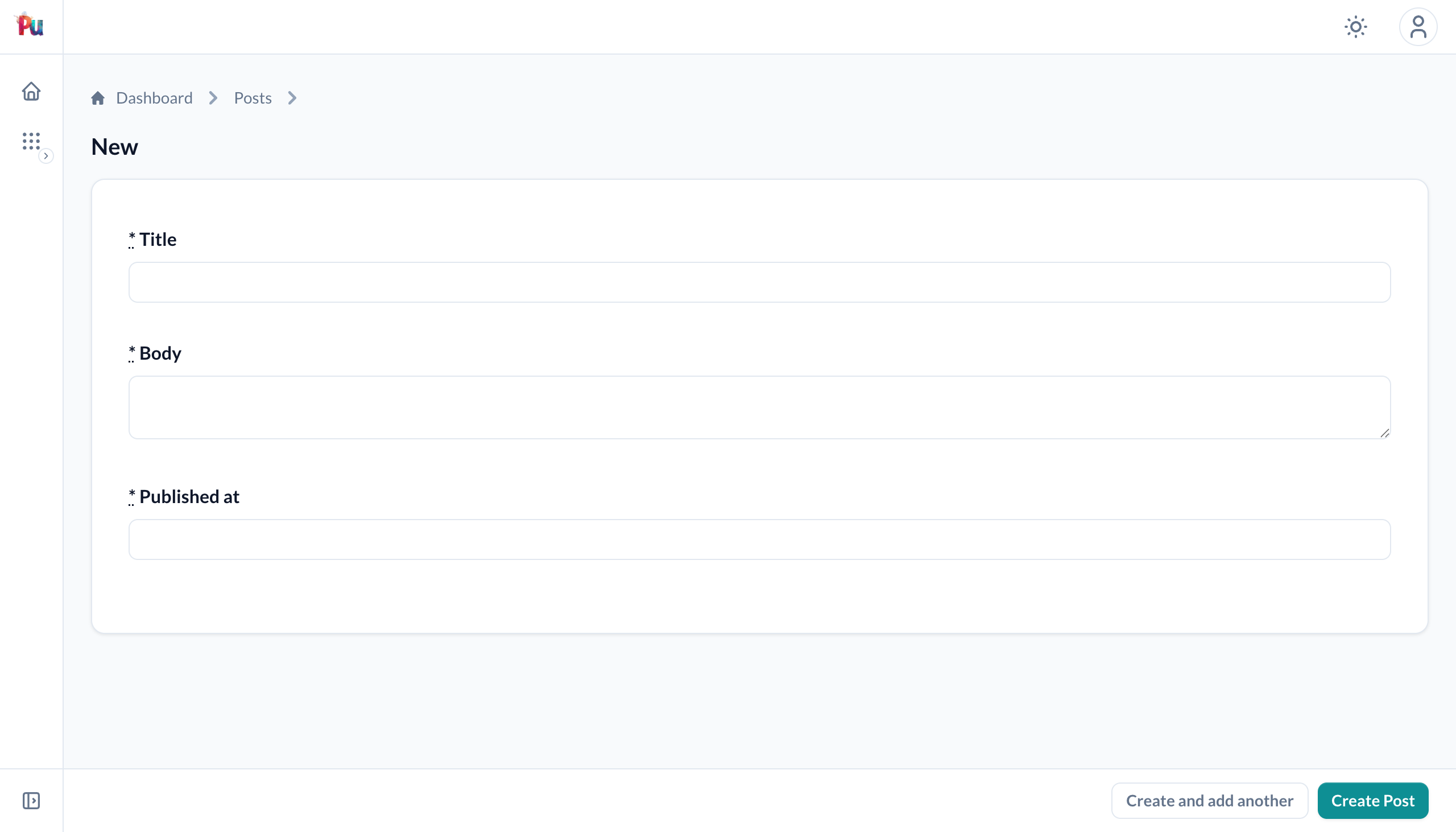
New
/admin/posts/new
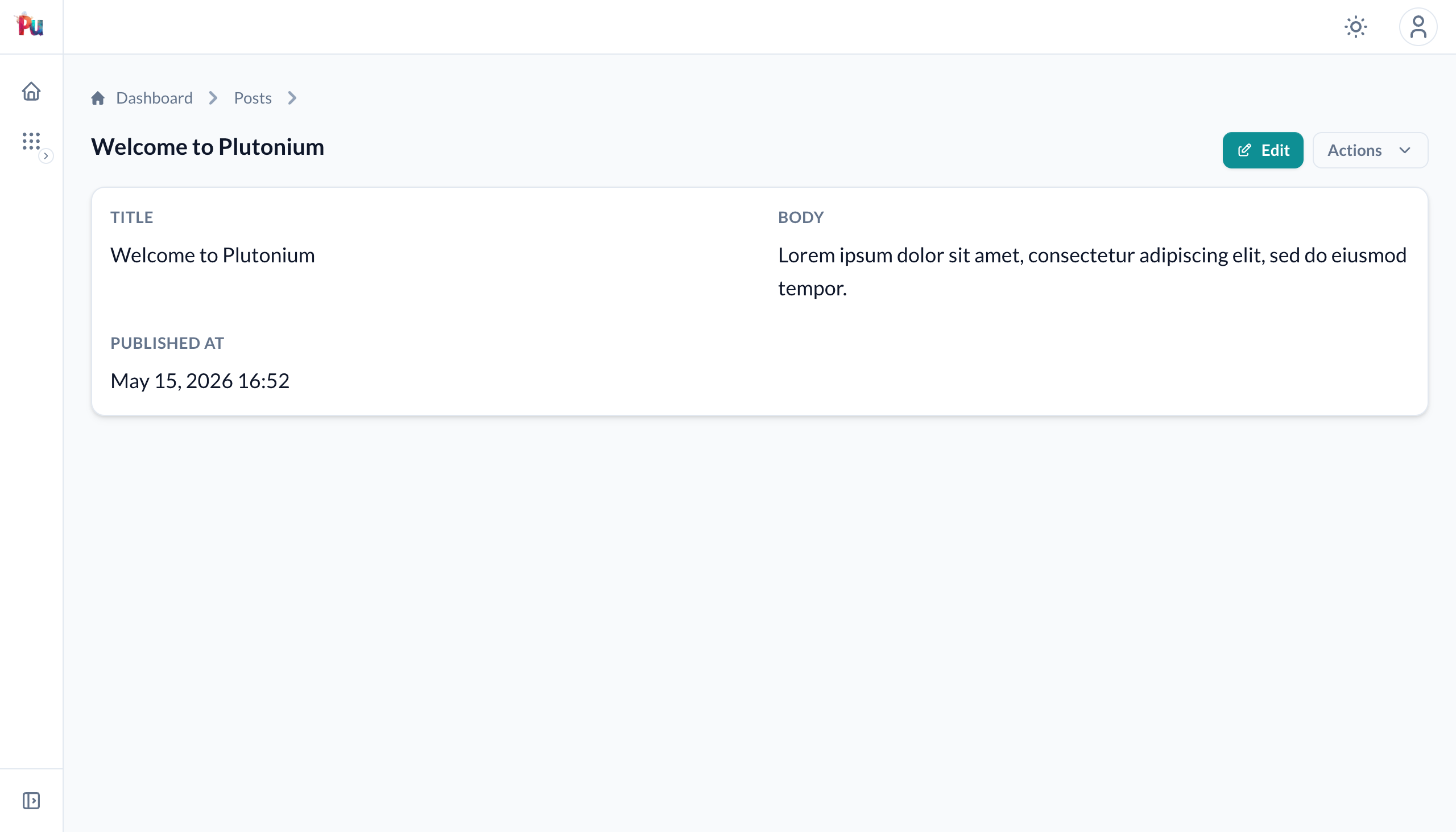
Show
/admin/posts/1
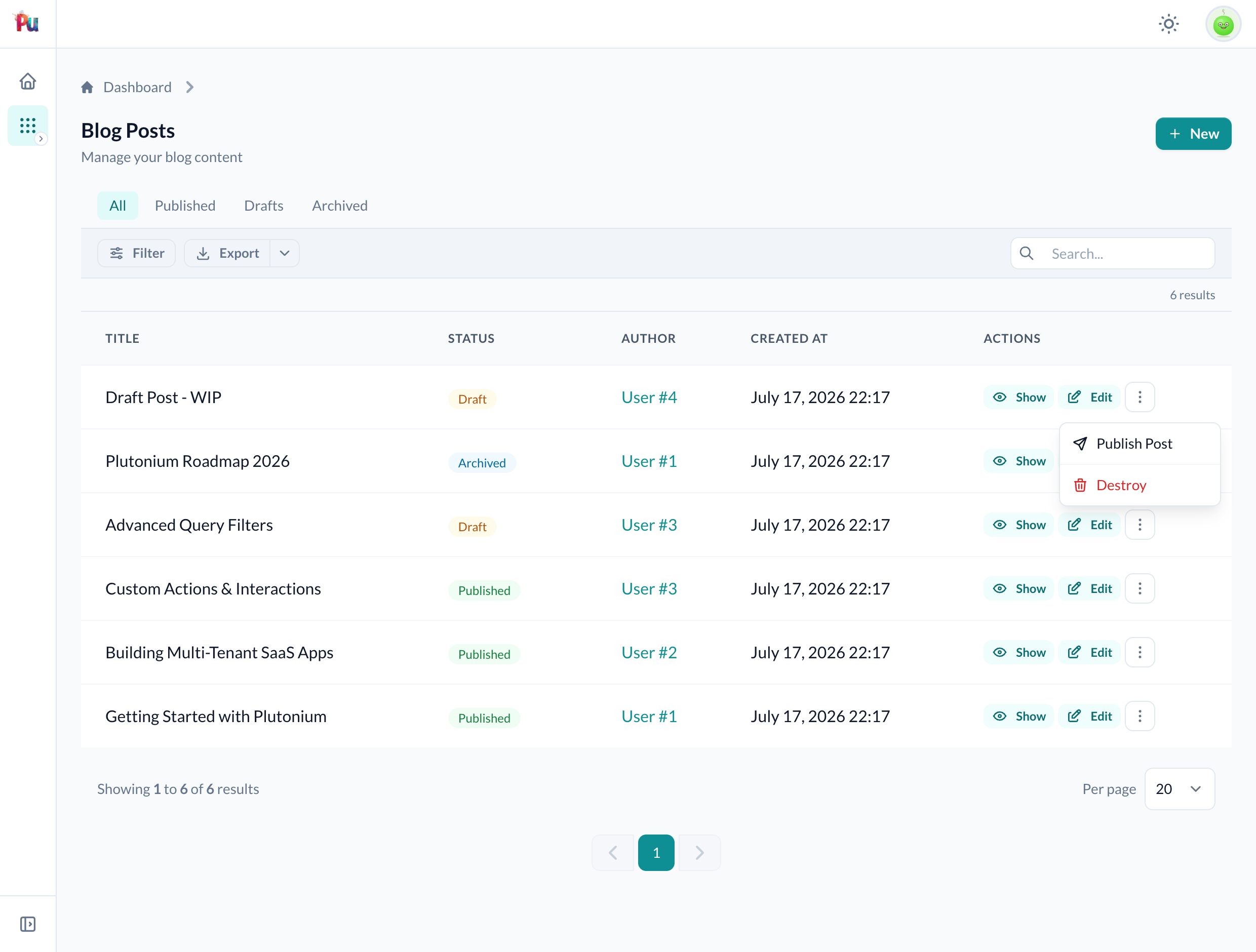
More than CRUD.
Five features other frameworks make you build yourself. All declarative. All policy-aware.